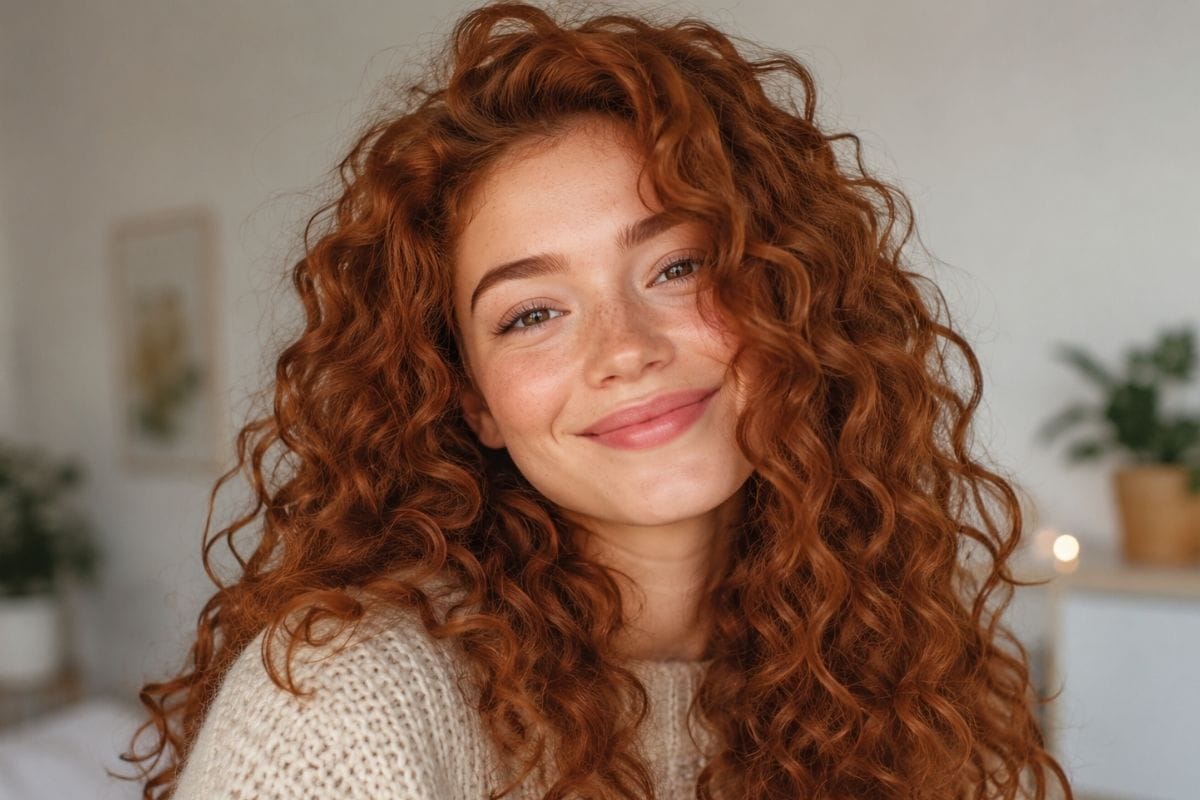
Gingerbread hair is everywhere right now, and lately it has become a trend. It’s that cosy, spiced brown with a red-copper warmth running through it, basically the biscuit turned into a hair colour.
It looks expensive, it suits loads of people, and it’s nowhere near as high-maintenance as going blonde. No wonder salons can’t stop doing it.
Short Summary:
Gingerbread hair is trending because it offers a warm, natural-looking blend of copper, caramel, and brown tones that suits different skin tones while being easier to maintain than brighter red shades. The low-maintenance colour trend has become popular among celebrities and salon clients looking for a soft seasonal hair update.
- Gingerbread hair is a warm brown base with cinnamon and auburn, giving a soft ginger-to-red glow.
- It’s low-effort, especially as balayage, and can often be done without any bleach.
- Celebs like Rihanna, Dua Lipa and Lily James have all worn their versions.
- It flatters most skin tones and grows out with no harsh line.
- Less than 2% of people are natural redheads, so it’s rare.
What Actually Is Gingerbread Hair?
It’s a deep, warm brown hair colour mixed with cinnamon and auburn shades, finishing with a ginger-to-red glow. The best bit is how flexible it is.
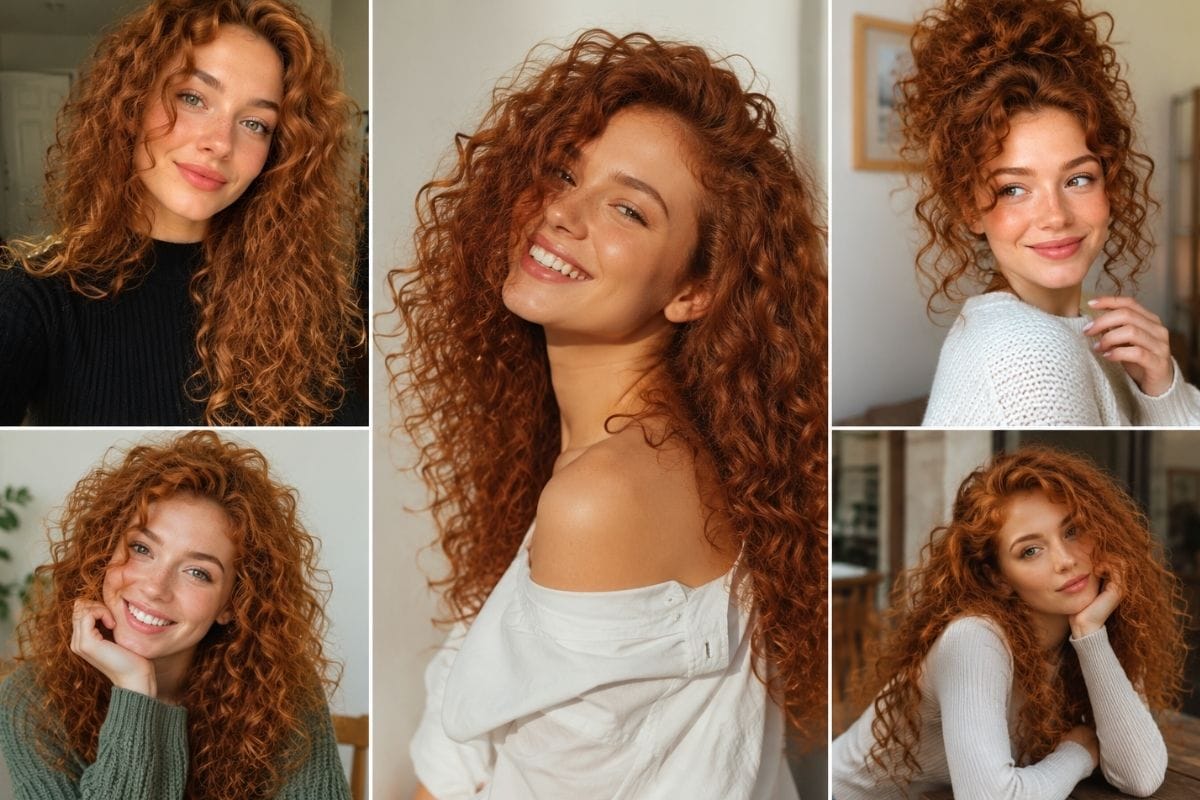
Want something subtle? Get your colourist to keep the auburn low and just balayage a bit of red through the ends. Fancy going harder? Ask for all-over highlights and let the ginger really sing. Because the base sits so close to natural brown, there’s genuinely no wrong way to do it.
There’s also a softer sister trend going around: gingerbread latte hair. As The List broke it down, that one’s a chocolate-brown base with lighter cinnamon swirls painted through, a bit like the drink.
Your roots stay dark, so the grow-out is dead forgiving, and you’re not living at the salon. Low effort, big warmth. Sign me up.
Where Did This Even Come From?
Warm golden shades have been floating around fashion since the 70s and 80s, but the current obsession is pure social media. TikTok went mad for food-named hair, cherry Coke, pumpkin spice, and gingerbread slotted right in as the winter ones.
It even caught the coquette wave, with people finishing the look off with little white bows. Salons weren’t strangers to it, mind. American Salon published a gingerbread latte formula all the way back in 2017. So it’s less a brand-new invention and more a slow-burn favourite that finally blew up.
Celebrities Who’ve Worn Gingerbread Latte Hair
Plenty of famous faces have already had a go. Lily James rocked warm cinnamon and copper strands, and Natalia Bryant helped make that cinnamon-brown swirl a proper thing.
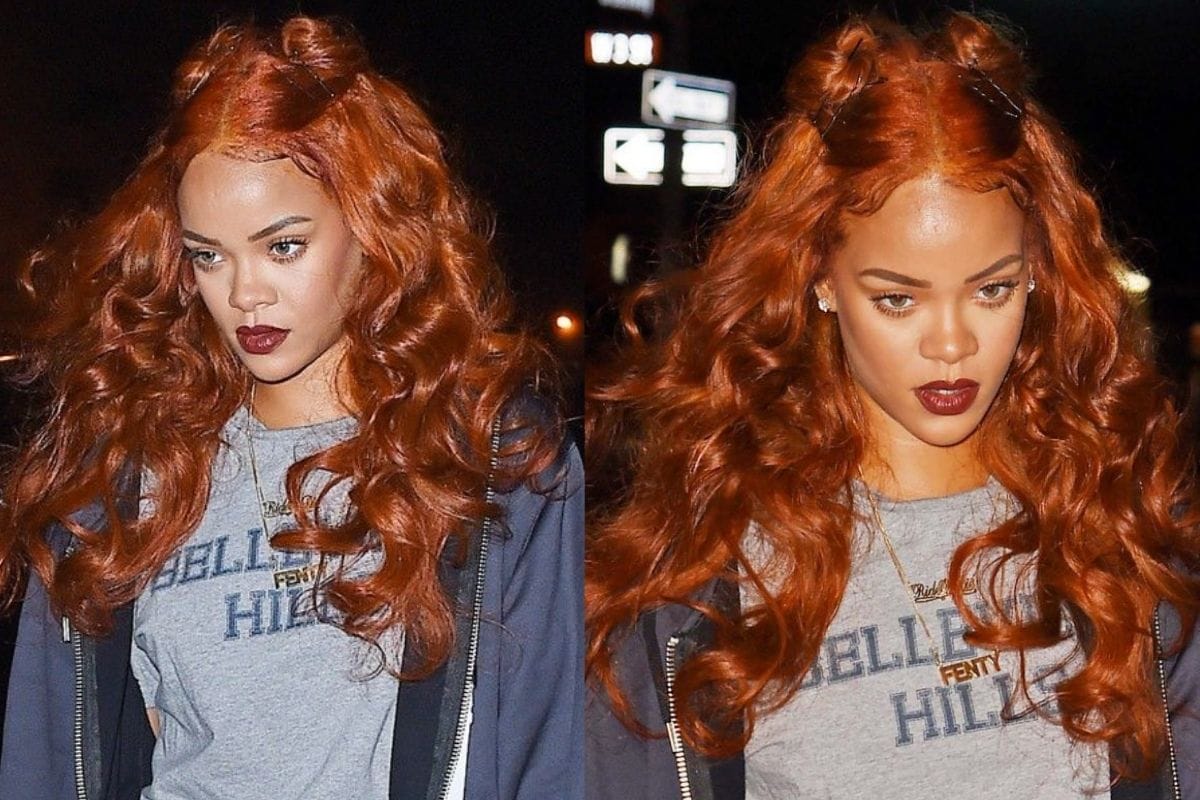
Rihanna’s 2015 look, which Stylist singled out as a rich, warm gingerbread shade, is still one of the best examples out there.
Kendall Jenner had her “smoked paprika” copper moment, Dua Lipa went full mahogany-red, and Megan Fox pushed brighter with her scarlet “velvet bob”.
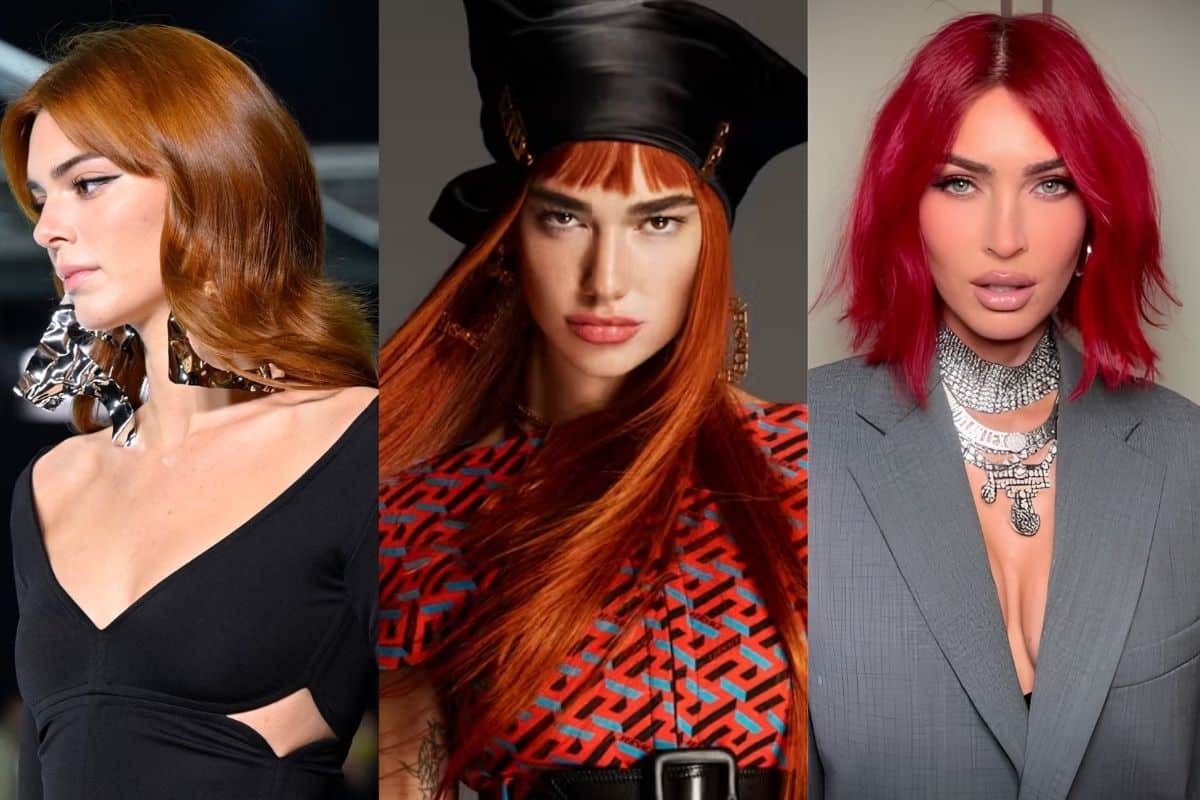
Even Billie Eilish’s cherry-red root job belongs to the same toasty family. The point is, from barely-there to bold, someone in the spotlight has already tested it for you.

Different Styles to Try
Gingerbread isn’t a one-note thing, so here are a few styles to nick:
- Ginger balayage: fresh copper painted through brunette for a subtle dimension.
- Money-piece highlights: brighter, face-framing bits that lift your cheekbones.
- Copper curls: brilliant if you’ve got freckles and want a low-stakes trial.
- Strawberry-blonde ends: softer and paler, lovely on fair skin.
- Deep ginger waves: bold and glossy, made for darker eyes and olive tones.
- Ginger pixie: warm colour showing off a choppy crop.
Basically, whatever your length or vibe, there’s a version with your name on it.
A Colour With Long History
CNN dug into the numbers: fewer than two per cent of people are natural redheads, yet the colour’s been both feared and fancied for centuries. During the 15th-century witch trials in Europe, ginger hair was treated as a mark of the devil, sometimes reason enough to be killed. Grim.
Hair historian Rachael Gibson points out that Judas was painted as a redhead in the Bible, and red-haired Gauls and Scots were cast as invaders, so the colour long stood for the outsider. Not everyone hated on it, though. Back in the 17th century, English academic Obadiah Walker actually wrote a defence of red-haired men against all the vilification they faced.
And author Jacky Colliss Harvey notes that Elizabeth I could’ve picked any wig going and chose flaming auburn, reportedly even dyeing her horses’ coats to match. During her reign, courtiers dyed their hair red to show they were on side. Talk about a glow-up for one colour.
Fun Facts You’ll Want to Repeat
Ditch The Label rounded up some belters worth keeping in your back pocket:
- 1-2% of the world’s population have red hair, making it the rarest natural hair colour in the human race.
- Scotland has a higher percentage of redheads than the rest of the world, 13% to be exact.
- It is possible for two non-red-haired parents to produce red-haired children.
- Not all ginger-haired people have freckles.
- There is no correlation between hair colour and temperament, either.
And no, redheads aren’t going extinct; that’s a myth too, even though it’s a recessive gene. On the divine side of things, the Norse god Thor is said to have red hair, and plenty of Greek mythology references “godlike” ginger hair. Not bad company.
The science is neat as well. As Wikipedia explains it, natural red comes from loads of the pigment pheomelanin and very little of the dark eumelanin, all controlled by the MC1R gene, which is on chromosome 16. That same gene is why so many redheads have fair skin, burn easily and can’t tan for love nor money, so keep the SPF handy year-round.
Quick reality check before you dye: 50% of people under 25 experience appearance-based bullying, and red hair has caught more than its share over the years. All the more reason the current celebration of the shade feels good.
Should You Try Gingerbread Hair This Season?
You should consider gingerbread hair if you want a warm, natural-looking colour change that feels stylish but remains easy to maintain.
Keeping It Looking Fresh
Warm reds fade quicker than most, so aftercare isn’t optional. Swap in a colour-safe shampoo and conditioner, and grab a brass-control formula (something like Matrix Total Results Brass Off) if your gingerbread starts leaning too orange; its blue-violet pigments cancel that out. A bond-repair treatment like Redken Acidic Bonding Concentrate keeps dyed strands strong and shiny too.
For touch-ups, budget every four to six weeks if your natural base is far off, or stretch to eight to ten weeks if you’re already close. Ask about a gloss “smudge” between visits to keep the tone rich. Do that, and your bakery-fresh colour will see you right through winter.
FAQs
- Where did the gingerbread hair trend come from?
Ans: Warm golden shades have been around since the 70s and 80s, but TikTok’s love of food-named hair made it blow up. Salons were mixing it years back, though, well before it went viral. - What styles of gingerbread hair can I try?
Ans: Go for ginger balayage, face-framing money pieces, copper curls, strawberry-blonde ends, deep ginger waves or a choppy ginger pixie. There’s a style for every person. - Does gingerbread hair suit dark hair and different skin tones?
Ans: Yes, it looks good on dark brown hair and flatters most skin tones. Warm and olive undertones especially love it; fair skin can go softer, and deeper skin can go richer. - Do you need to bleach your hair for gingerbread?
Ans: Usually not. It can often be done with colour alone, without lightening, which keeps your hair healthy. Only the very bright, pale versions might need a little lift. - Is gingerbread hair high-maintenance?
Ans: Not really, and that’s the main appeal. Done as balayage, it grows out with no harsh line, so you can stretch salon visits to every eight to ten weeks. - Are natural redheads really going extinct?
Ans: No, that’s a myth. Red hair comes from a recessive gene, so it can skip generations, but it isn’t dying out. Two non-red-haired parents can even have a red-haired child.
Sources & References:
- Wikipedia – Natural red hair comes from the pigments pheomelanin and eumelanin, all controlled by the MC1R gene on chromosome 16.
- Ditch The Label – 1-2% of the world’s population have red hair.
- Hair – Gingerbread hair is a deep, warm brown hair mixed with cinnamon and auburn, finishing with a ginger-to-red glow.
- Stylist – Rihanna’s 2015 look is one of the iconic looks from the celebrities.